
Table of Contents
A local home-cleaning client came to me with a service page that just wasn’t ranking. It read like every other cleaning company page online — keyword-heavy, generic, and honestly, kind of boring.
Rather than piling on more keywords, I took the opposite approach: I cut the page back to nothing and rebuilt it from scratch around the actual questions real customers were asking before they booked. No filler, no forced phrases — just answers to what people genuinely wanted to know. This is where audience-first SEO became the foundation of the entire rewrite.
That’s audience-first SEO in action. You write for the human reading the page, not the crawler scanning it. And the results backed it up — within 6 to 8 weeks of the rewrite, the page moved up in rankings and started pulling in more organic traffic. More importantly, it wasn’t just extra visitors padding the numbers. It was the right visitors, the kind who actually turned into bookings.
If you’ve been told SEO means stuffing pages with keywords and hoping for the best, audience-first SEO is the alternative. Here’s exactly how audience-first SEO works, and how to actually do it.
What Audience-First SEO Actually Means
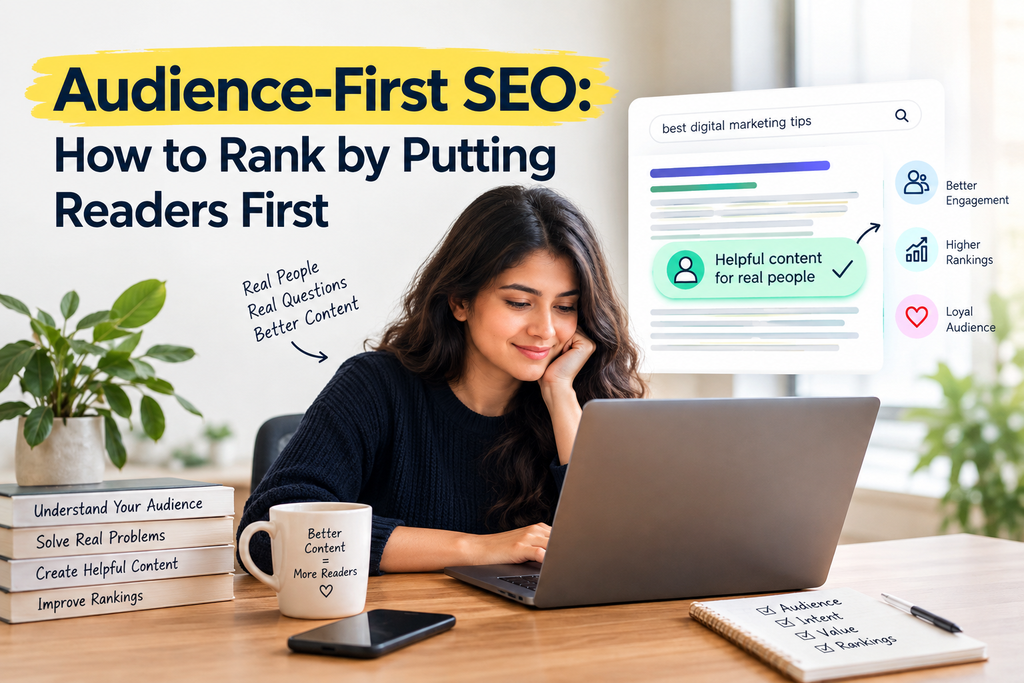
Audience-first SEO means building your content around your reader’s real questions and problems first, then letting good SEO practices support that content — not the other way around.
This isn’t a soft, feel-good idea. Google’s own guidance on creating helpful content asks whether a page demonstrates real expertise and whether readers leave feeling satisfied, rather than needing to search again for a better answer. That’s the actual bar you’re writing to.
A Real Example: Rewriting a Page Around Real Questions
Here’s what that looked like with the home-cleaning client. The original page was written around a handful of high-volume keywords, but it never actually answered what a potential customer wanted to know: what’s included in a standard clean, how pricing works, whether the company serves their specific neighborhood, and what happens if they’re not happy with the result. This is exactly where audience-first SEO can make a difference.
Once I rewrote the page around those actual questions — service details, common customer concerns, and local specifics — the content became genuinely useful instead of just keyword-dense. This audience-first SEO approach focused on matching the content to real customer needs rather than simply adding more keywords.
Rankings improved within 6 to 8 weeks, and the traffic that came in matched people who were ready to book, not just people passing through. That experience reinforced how audience-first SEO can help create content that serves both search visibility and the people who actually need the service.
My Process for Writing Audience-First Content
Before I ever open a doc to start writing, there’s a process I follow every time:
- Identify the target audience and their search intent. What problem are they actually trying to solve when they land on this page?
- Map out their specific questions and pain points. Not assumptions — actual questions.
- Review competitors, customer feedback, and related search queries. This shows gaps in what’s already ranking and what’s missing from the conversation.
- Outline around real value, not keyword volume. The outline should answer questions in the order a reader would actually ask them.
Where I Find Real Customer Questions
This step matters more than people think. My go-to sources are:
- Google’s “People Also Ask” — shows exactly what people are searching next
- Customer reviews — often surface the specific language and concerns real buyers use
- Support and sales team questions — the questions people ask before they’re ready to buy
- Search suggestions and competitor content — helps spot what’s missing, not just what’s already covered
Combining these gives a much clearer picture of what a page actually needs to cover than keyword research tools alone.
The Mistake: “Audience-First” That’s Still Just Rankings Chasing
Here’s the thing — a lot of content claims to be audience-first SEO while it’s still really just built around high-volume keywords, with the audience’s actual intent and pain points ignored.
You can usually spot it quickly. It feels keyword-stuffed, generic, or clearly written to satisfy a search algorithm rather than answer a real question. If a page could be about any competitor’s business with a find-and-replace of the company name, it’s not audience-first SEO — it’s search-engine-first with better branding.
The real test of audience-first SEO: does this page answer the question a specific reader came here with, or does it just mention the right words enough times?
How to Know If Audience-First Content Is Actually Working
Rankings are one signal, but they’re not the only one — and honestly, not even the most important one. Here’s what to track instead:
| Signal | What It Tells You |
| Time on page | Whether readers are actually engaging, not bouncing immediately |
| Conversions | Whether the content moves people to take action |
| Returning visitors | Whether the content built enough trust to bring people back |
| Movement to other pages | Whether readers trust the site enough to keep exploring |
| Direct enquiries or feedback | Whether the content directly answered what people needed |
Watching whether the content actually answers the questions people are asking — through both analytics and direct customer feedback — gives a much fuller picture than rankings alone. A page can rank decently and still fail to convert if it doesn’t genuinely help the reader once they arrive.
Frequently Asked Questions
What’s the difference between audience-first SEO and traditional SEO?
Traditional SEO often starts with keyword volume and works backward into content. Audience-first SEO starts with real reader questions and problems, then applies SEO best practices to make that content findable.
How long does it take to see results from audience-first content?
In one real example, ranking improvements were noticeable within 6 to 8 weeks after a rewrite, though results can vary depending on competition, site authority, and how established the page already was.
Where can I find the real questions my audience is asking?
Google’s “People Also Ask,” customer reviews, support and sales team conversations, and competitor content are all reliable, low-cost sources.
Does audience-first content still need keywords?
Yes — keywords still matter for discoverability, but they should reflect language your audience actually uses, placed naturally to support the content rather than dictate it.
How do I know if my content is audience-first or just keyword-driven?
If the content reads like it could apply to any competitor with a name swap, or feels stuffed with repeated phrases rather than answering a clear question, it’s likely still search-engine-first.
Looking for the best digital marketing strategist in Malappuram? Srijinkk helps businesses improve their online presence through SEO, social media management, and Google Ads with practical strategies focused on visibility, growth, and reaching the right audience.